
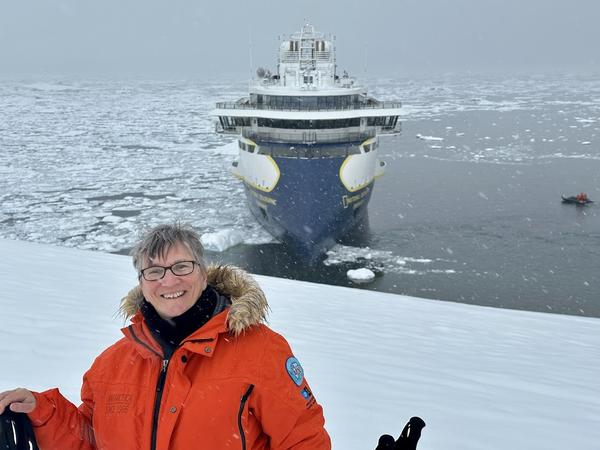
As a Virtuoso Cruise Icon and expedition cruise specialist who has personally sailed to Antarctica aboard Lindblad Expeditions’ National Geographic Endurance, I can tell you the single biggest factor in whether your Antarctica trip delivers what you’re imagining isn’t the operator’s marketing, the price point, or even the itinerary. It’s one number: how many passengers are on your ship.
This past week, I spent five days in virtual sessions hosted by ASTA, investing my own time and money into deepening my expedition cruise expertise — covering Antarctica fly-cruise itineraries, the science behind expedition travel, and what’s next from operators like Silversea, Scenic, Lindblad, HX, Viking, Aurora, and Polar Latitudes.
The biggest takeaway wasn’t new information. It was a lesson I already knew firsthand from my own time in Antarctica — underscored again, session after session.
Ship size matters. More than almost anything else you’ll choose for an expedition cruise.
Why Ship Size Isn’t a Minor Detail
If you’re planning a trip to Antarctica, you’re planning a once-in-a-lifetime journey. Fewer than 1% of travellers on Earth will ever set foot there.
You’re investing serious time and serious money into a genuine bucket-list trip. Which means you want access — not the possibility of access, but actual access.
And access on an expedition cruise is governed almost entirely by one number: how many passengers are on your ship.
How IAATO Categorizes Expedition Ships
The International Association of Antarctica Tour Operators (IAATO) — the governing body that regulates tourism in Antarctica — sorts ships into categories by passenger count. Those categories determine what your trip actually looks like.
500+ passengers — Cruise-Only. You don’t get off the ship. At all. This is a scenic sail-by, not a landing expedition.
201–500 passengers — Category 2. Some access, meaningfully reduced. Landing sites drop from 40+ down to roughly 17, and you’ll typically disembark once per day at most — if the numbers and weather cooperate.
13–200 passengers — Category 1. Full accessibility. Every landing site available. Two or more landings a day, sometimes three, with activities running in parallel — one group ashore while another kayaks or Zodiac tours, everyone back for lunch, then an afternoon landing to close the day.
What This Actually Feels Like Onboard
On a Category 2 ship, if a landing is capped and only part of the ship disembarks, you’re not guaranteed to be in that group. It starts to feel less like an expedition and more like a lottery — will today be the day you actually get off?
On a Category 1 ship, that anxiety simply doesn’t exist.
For a trip most people take exactly once, that difference is everything.
My Advice, Plainly
Don’t book a cruise-only ship if landing in Antarctica is the point of your trip. And think very carefully before booking Category 2 if full access matters to you — because it usually does, once people understand what they’re trading away.
This is exactly why I spend weeks like this one in continuing education: so that when a client tells me Antarctica is on their bucket list, I can match them to a ship that actually delivers the experience they’re imagining — not just the one with the best marketing photos.
Size matters. Now you know why.
Ready to plan your Antarctica expedition? As a Virtuoso Cruise Icon with firsthand Antarctic expedition experience, I’ll help you choose the ship category — and the operator — that actually matches the trip you’re picturing. Get in touch or explore my expedition cruising specialty page.
Sheila Gallant-Halloran is the founder of Lush Life Travel in Ottawa, Ontario, and a three-time consecutive Virtuoso Cruise Icon (2024, 2025, 2026), ranking in the top 1% of cruise advisors worldwide.