
Adventure Corner: From Sea to Ice — Lindblad, White Desert and the Future of Antarctica Travel 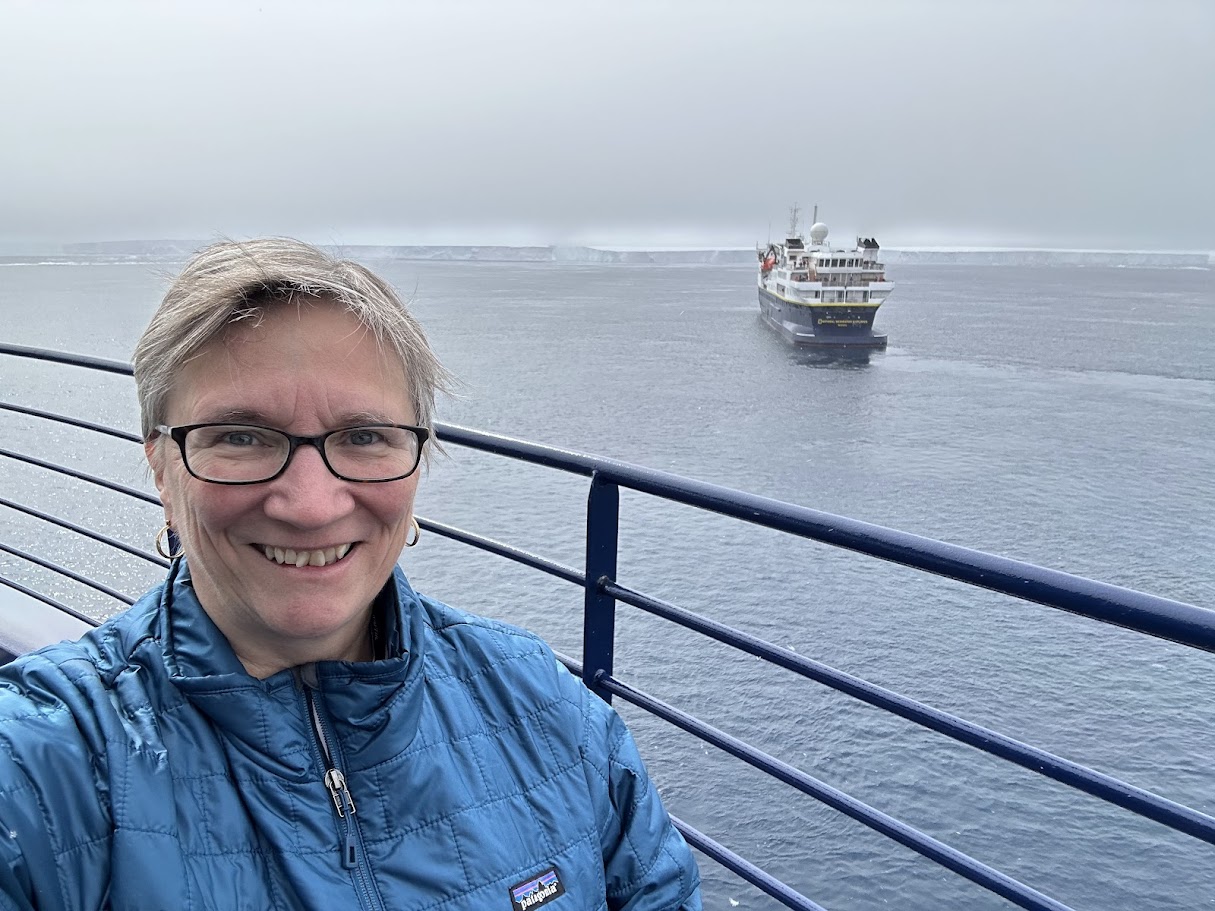
What happens when one of the pioneers of expedition cruising joins forces with a company that takes travellers deep into Antarctica’s frozen interior?
There are some places in the world that change the way you see everything.
For me, Antarctica is one of them.
In November 2024, I sailed to Antarctica aboard Lindblad Expeditions’ National Geographic Endurance. It was spectacular — the immense icebergs, the wildlife, the silence, and the extraordinary feeling of being somewhere so remote that the natural world is unquestionably in charge.
And one of the things that makes Antarctica so fascinating is that there isn’t just one way to experience it.
Recently, Lindblad Expeditions announced the acquisition of a 60% stake in White Desert, a company specializing in extraordinary land-based Antarctic experiences, as well as Echo Charlie, which offers aviation-based adventures.
I was delighted to be interviewed by Brinley Hineman of Travel Weekly about what the acquisition could mean for expedition travellers.
But I think the bigger story goes far beyond a corporate acquisition.
It’s about the evolution of expedition travel — and the responsibility that comes with visiting some of the most extraordinary and fragile places on Earth.
Lindblad helped pioneer Antarctic expedition travel
To understand why this acquisition is so interesting, it’s worth looking back.
In 1966, Lars-Eric Lindblad took the first group of tourists to Antarctica, helping to establish the concept of expedition travel for people who weren’t scientists or professional explorers.
That was a revolutionary idea.
Antarctica was no longer somewhere that only researchers and explorers could experience. Curious travellers could begin learning about the continent firsthand.
The following year, Lindblad helped pioneer international expedition tourism in the Galápagos Islands.
And here’s something I particularly admire about Lindblad’s history.
In 1968, Lindblad Travel entered into an agreement to fund the salaries of the first two Galápagos National Park officials.
In other words, conservation wasn’t simply something that came along after tourism was established. Supporting the protection of the destination was part of the thinking from the beginning.
That history matters to me.
I believe the best expedition travel doesn’t simply show us extraordinary places. It helps us understand why they matter — and why protecting them matters, too.
My own Lindblad expeditions
My relationship with Lindblad goes back a decade.
In September 2016, I circumnavigated Newfoundland — my home province — aboard National Geographic Explorer.
There was something extraordinary about seeing the coastline and communities of Newfoundland from an expedition ship, experiencing familiar places through a completely different lens.
Then, in November 2024, I travelled to Antarctica aboard National Geographic Endurance.
That voyage reinforced why I love expedition cruising.
It’s not simply about reaching a destination. It’s about the naturalists, historians, photographers, scientists and expedition leaders who help you understand what you’re seeing.
It’s about standing on the bridge watching the navigation team at work, listening to an expert explain the formation of an iceberg, or discovering something you didn’t even know you wanted to learn.
Expedition cruising is particularly well suited to lifelong learners.
And I often tell clients that you don’t have to think of yourself as a cruiser to fall in love with expedition travel.
You just have to be curious.
What exactly is White Desert?
White Desert approaches Antarctica from an entirely different direction.
Instead of arriving by expedition ship and exploring the Antarctic Peninsula and surrounding waters, White Desert flies guests from South Africa into Antarctica, with experiences based around remote luxury camps on the continent itself.
Depending on the itinerary, travellers may explore remarkable ice formations, visit an emperor penguin colony or venture toward the South Pole.
It’s a very different kind of Antarctic adventure.
White Desert was founded by polar explorer Patrick Woodhead and has spent two decades developing its specialized operations in one of the world’s most challenging environments.
Its camps are designed to be removable, with waste flown out of Antarctica. The company also reports that it has operated as carbon neutral since 2007.
The luxury is certainly part of the appeal, but the logistics, access and expertise required to operate there are what make this such an unusual travel experience.
And it comes with a correspondingly significant investment.
Two ways to experience Antarctica
I think it’s important to understand that a ship-based Antarctic expedition and a White Desert journey aren’t interchangeable.
An expedition cruise offers the opportunity to explore the Antarctic Peninsula and surrounding islands by sea, often with Zodiac outings, shore landings, wildlife encounters and educational programming.
It’s an immersive experience that unfolds over several days, with the ship serving as your comfortable expedition base.
A White Desert journey is about accessing the Antarctic interior by air, experiencing an extraordinary landscape that most cruise travellers never reach.
Both are remarkable, but they offer different perspectives on the continent.
For someone fascinated by penguins, marine wildlife, icebergs and the Antarctic coastline, an expedition cruise may be the perfect choice.
For someone dreaming of the South Pole or the extraordinary isolation of Antarctica’s interior, a White Desert expedition could be compelling.
And for the truly curious traveller? Perhaps both belong on the list.
Conservation isn’t an optional extra
One of the reasons I’ve long admired Lindblad is its commitment to connecting exploration with conservation.
Through the Lindblad Expeditions–National Geographic Fund, the company and its travellers support conservation, scientific research, education and community initiatives.
Lindblad has also been a longtime supporter of National Geographic’s Pristine Seas program, which uses science, exploration and storytelling to advance the protection of important marine environments.
And the company’s history in the Galápagos demonstrates how far back that philosophy extends.
I think this matters enormously when we’re discussing Antarctica.
Antarctica isn’t simply another luxury destination.
It’s a place where environmental stewardship, responsible operations and the cumulative effects of tourism deserve careful consideration.
No form of travel to such a remote location is without environmental impact. That makes it particularly important to ask questions about operational standards, waste management, scientific engagement and the measures companies take to reduce their footprint.
For me, responsible expedition travel should encourage a greater appreciation for the places we visit — while taking seriously the obligation to help preserve them.
What does Lindblad’s acquisition mean for travellers?
The immediate change is primarily one of ownership and opportunity.
Lindblad has acquired majority stakes in White Desert and Echo Charlie, but White Desert is continuing to operate as a distinct brand with its existing team and experiences.
That means travellers shouldn’t assume that White Desert excursions will suddenly become part of a Lindblad cruise itinerary.
Indeed, when Travel Weekly asked Lindblad CEO Natalya Leahy about possible combinations of the companies’ experiences, she indicated it was too early to discuss specific plans.
What interests me is the longer-term potential.
Lindblad has been expanding beyond ship-based expeditions through businesses such as Natural Habitat Adventures and DuVine Cycling + Adventure Co.
With White Desert and Echo Charlie, that portfolio now extends further into polar land exploration and specialized aviation.
The future of expedition travel may be less about whether you travel by ship, land or air — and more about choosing the right combination of experiences for your interests.
It’s not just about the newest ship
When Brinley Hineman interviewed me for Travel Weekly, I shared my view that White Desert gives Lindblad another way to serve travellers who want to explore more deeply.
And that’s the part of this story that excites me.
The best expedition experiences aren’t necessarily defined by the newest ship, the most luxurious suite or the most elaborate amenities.
They’re defined by access, expertise, learning and the emotional connection you develop with a place.
Luxury and adventure aren’t opposites. Done well, comfort can make extraordinary exploration possible for travellers who might otherwise never consider it.
But the real luxury, in my view, is having an experience that changes how you understand the world.
The Return on Life
I spent more than twenty years working as an actuary, thinking about risk, financial security and return on investment.
These days, I think a great deal about Return on Life.
What do we gain from the experiences we choose?
What do we learn?
How do they change us?
And what responsibility do we have to the places and people who make those experiences possible?
Antarctica is a wonderful example.
You may go expecting penguins and icebergs.
You may come home with a much deeper understanding of our planet.
And that, to me, is the real promise of expedition travel.
Live Life. Love Travel. Return on Life. ❤️
Sheila Gallant-Halloran is the founder of Lush Life Travel, a Virtuoso Cruise Icon and a specialist in river and expedition cruising. She has sailed with Lindblad Expeditions in Newfoundland and Antarctica and helps curious travellers discover extraordinary experiences around the world.
Read the Travel Weekly article: Lindblad expands Antarctica — and luxury — presence with acquisition
Explore more Adventure Corner reading: An Open Bridge — One of Expedition Cruising’s Best-Kept Secrets