
For twenty years, before I ever booked a client’s first cruise or flight, I measured risk for a living.
As an actuary, my work revolved around mortality tables, probability curves, and understanding what helps people live longer, healthier lives. My career was built on numbers—not wishful thinking.
So when someone tells me travel is “just a vacation,” I can’t help but smile.
Because increasingly, the research tells a very different story.
Travel may be one of the most valuable investments we can make—not only in our happiness, but potentially in the long-term health of our brains.
What Is Cognitive Reserve?
One concept that has fascinated researchers for years is cognitive reserve.
Think of it as your brain’s resilience—the ability to continue functioning well even as we age or experience changes associated with diseases like Alzheimer’s.
Just as strength training builds muscle, certain life experiences appear to strengthen the brain by creating additional neural pathways that help compensate for age-related changes later in life.
The exciting part?
Many of those experiences are completely within our control.
New Research Highlights the Power of Travel
Researchers at Trinity College Dublin’s Global Brain Health Institute recently examined which lifestyle activities contribute most to building cognitive reserve during midlife.
Among the activities studied were:
- Socializing with family and friends
- Learning a musical instrument
- Artistic pursuits
- Physical activity
- Reading
- Learning another language
- Foreign travel
Foreign travel emerged as one of the strongest contributors—even among people carrying a higher genetic risk for Alzheimer’s disease. Importantly, these benefits appear decades before symptoms would typically develop.
That’s remarkable.
Why Does Travel Matter So Much?
Another research team at Edith Cowan University reviewed evidence from tourism, psychology, neuroscience, and health sciences to understand why travel consistently appears linked with healthier aging.
Their conclusion wasn’t that vacations magically prevent disease.
Rather, travel naturally combines several factors already known to support brain health:
- Novel experiences
- Physical movement
- Learning
- Social interaction
- Stress reduction
- Exposure to new environments
- Curiosity
It’s not one element alone.
It’s the combination.
Novelty Is Brain Exercise
One word appears repeatedly throughout the research:
Novelty.
Not luxury.
Not distance.
Not how much you spend.
Simply experiencing something new.
Our brains are designed to notice change.
When we’re exposed to unfamiliar places, languages, foods, customs, landscapes, and ways of thinking, our brains can’t rely on routine.
Instead, they build new connections.
That’s exactly what researchers believe contributes to cognitive reserve.
I’ve Experienced This First-Hand
I’ve seen this happen—not only in the research, but in my own travels.
Standing on the deck of National Geographic Endurance in Antarctica, nothing felt familiar.
The silence.
The ice.
The wildlife.
The scale of the landscape.
There was no autopilot.
Every sense felt fully engaged.
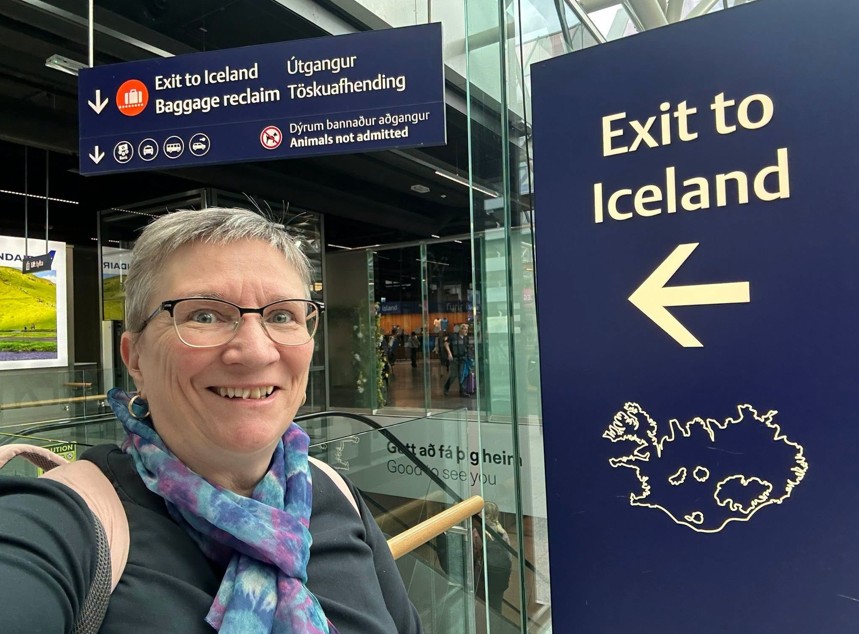
More recently, while sailing Iceland aboard Aurora Expeditions’ Sylvia Earle, I found myself constantly learning—from marine biologists, ornithologists, historians, and geologists who transformed every landing into a lesson about the natural world.
Even on a European river cruise, your brain rarely gets to coast.
You wake up in one country.
By afternoon you’re hearing another language.
The architecture changes.
The cuisine changes.
The history changes.
Even ordering lunch becomes an opportunity to learn.
That’s exactly the kind of mental flexibility researchers believe strengthens the brain.
You Don’t Have to Travel Across the World
One of the encouraging aspects of this research is that novelty exists on many levels.
You don’t need an expedition to Antarctica to challenge your brain.
You might:
- Walk a different route through your neighbourhood.
- Visit a museum you’ve always meant to explore.
- Learn basic phrases in another language.
- Try an unfamiliar cuisine.
- Explore a nearby town you’ve never visited.
Every new experience asks your brain to work a little differently.
That matters.
However, the research also suggests that immersive travel—experiencing genuinely unfamiliar cultures, languages, and environments—provides an especially rich combination of the ingredients associated with healthy brain aging.
Why I Believe Travel Is an Investment
People sometimes ask why I’m so passionate about helping clients plan meaningful journeys.
This is why.
Years ago, as an actuary, I measured Return on Investment (ROI).
Today, I help people maximize something different:
Return on Life™.
Travel creates memories, certainly.
But it also creates curiosity.
Confidence.
Perspective.
Relationships.
Wonder.
And increasingly, research suggests it may also help build the resilience our brains need for healthier aging.
That’s an extraordinary return.
The Best Trip May Be the One That Challenges You
The takeaway from all of this research isn’t that every vacation prevents dementia.
Science doesn’t support that claim.
What it does suggest is something both hopeful and practical.
Our brains thrive when we continue learning.
When we remain curious.
When we expose ourselves to unfamiliar experiences rather than repeating the same routines year after year.
The most valuable journey isn’t necessarily the easiest one.
It’s the one that asks something of you.
Perhaps that’s learning to navigate a new city.
Perhaps it’s listening to an expedition leader explain penguin behaviour in Antarctica.
Perhaps it’s hearing church bells echo across the Rhine Valley as your river ship glides into a town you’ve never heard of before.
Whatever form it takes, every new experience reminds your brain that it’s still growing.
And maybe that’s one of travel’s greatest gifts.
Ready to Invest in Your Return on Life™?
If you’ve been thinking about a European river cruise, Antarctica, Iceland, the Galápagos, or another destination that’s completely outside your comfort zone, perhaps your curiosity is telling you something.
Not simply that you’re ready for a holiday.
But that you’re ready to keep learning.
I’d love to help you find the journey that’s right for you.
Because sometimes the best investment we make isn’t in where we go.
It’s in who we become when we get there.
About the Author
Sheila Gallant-Halloran is the founder of Lush Life Travel, a three-time Virtuoso Cruise Icon (2024, 2025, and 2026), placing her among the top 1% of luxury cruise advisors worldwide. A former actuary with more than 20 years of experience measuring financial and longevity risk, she now specializes in luxury river cruises, expedition cruising, and wellness travel. Through her Return on Life™ philosophy, she helps clients invest in experiences that enrich both their lives and their wellbeing.
Sources
Cao, B., Qi, Q., et al. (2026). The Relative Contribution of Modifiable and Non-Modifiable Factors for Determining Cognition in Mid-Life Individuals at Risk for Late-Life Alzheimer’s Disease. Alzheimer’s & Dementia: Diagnosis, Assessment & Disease Monitoring. Trinity College Dublin, Global Brain Health Institute.
Hu, F., Wen, J., et al. (2024). The Principle of Entropy Increase: A Novel View of How Tourism Influences Human Health. Journal of Travel Research. Edith Cowan University.