
Lindblad vs. HX vs. Quark vs. Ponant vs. Aurora vs. Silversea: Which Expedition Cruise Line Is Right for You?
When travellers begin comparing expedition cruises, they often start with the cruise-company names.
Lindblad.
HX.
Quark.
Ponant.
Aurora.
Silversea.
Then comes the question:
Which expedition cruise line is best?
The short answer is:
There isn’t one expedition cruise line that is best for every traveller.
These six companies can take you to some of the same destinations, but they don’t necessarily deliver the same experience.
One may place greater emphasis on naturalists, science and photography.
Another may offer more adventure activities.
Another may combine a serious expedition operation with a substantially more luxurious onboard experience.
And even within the same company, the individual ship can change the answer.
That is why I don’t begin by asking which expedition cruise line is best.
I begin with:
What do you want the expedition to feel like?
The six expedition cruise lines at a glance
| Expedition company | A strong starting point for travellers who prioritize… |
|---|---|
| Lindblad Expeditions–National Geographic | Naturalists, learning, photography, science and destination immersion |
| HX Expeditions | Science, broad inclusions and an accessible introduction to expedition travel |
| Quark Expeditions | Polar specialization, active exploration and extensive adventure options |
| Ponant | French-influenced luxury combined with expedition travel |
| Aurora Expeditions | Smaller-ship adventure and an extensive activity program |
| Silversea Expeditions | Luxury accommodations, dining and service alongside an expedition program |
That is only the beginning of the comparison.
The destination, itinerary, ship, passenger capacity, season and expedition team can all change the experience.

A note about my own firsthand experience
I work with all six companies, but I won’t pretend that working with a company is the same as personally experiencing its expedition product.
My own completed expedition voyages include:
- Antarctica and Newfoundland with Lindblad Expeditions–National Geographic
- Canada’s boreal winter aboard Ponant’s Le Commandant Charcot
- Iceland aboard Aurora Expeditions’ Sylvia Earle
I have also inspected Ponant’s Le Champlain and Viking Octantis.
I have sailed with Silversea aboard Silver Nova, but that was an ocean cruise—not a Silversea expedition. I therefore don’t present it as firsthand experience of Silversea’s expedition operation.
My evaluations also draw on the work I do comparing ships and itineraries, planning expedition cruises for clients and studying how the different products operate.
That distinction matters to me.
There is a difference between sailing a ship, inspecting it, booking it for clients and learning about it from professional training.
All four can be useful.
But they are not interchangeable.
You can see my complete firsthand expedition-cruise experience.
Lindblad Expeditions–National Geographic: naturalists, photography and learning
Consider Lindblad if you want the expedition to feel like a deeply immersive natural-history experience.
The company’s identity is closely connected to exploration, interpretation, photography, science and the natural world.
A Lindblad expedition isn’t simply about being taken to a remote destination. The naturalists, photographers, expedition leaders and other specialists are a significant part of the product.
That can make Lindblad particularly appealing to:
- Wildlife enthusiasts
- Photographers
- Lifelong learners
- Families interested in nature and science
- Travellers who want considerable interpretation of what they are seeing
- People who value citizen-science opportunities
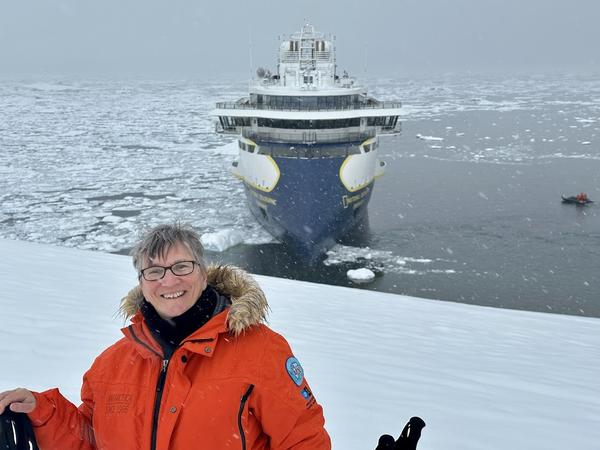
I experienced this firsthand in Antarctica aboard National Geographic Endurance.
The ship mattered.
But so did the expedition team, photography support, daily briefings and opportunities to understand the wildlife, ice and landscape surrounding us.
I contributed whale photographs to Happywhale, which helps researchers identify and track individual whales.
My relationship with Lindblad goes back even further. In September 2016, I circumnavigated Newfoundland—my home province—aboard National Geographic Explorer.
Those were two very different destinations, but both demonstrated the value Lindblad places on interpretation and learning.
Lindblad now operates across a wide range of destinations, including Antarctica, the Arctic, Galápagos, Alaska, Iceland, Baja California and numerous temperate and tropical regions. Its fleet also includes markedly different vessels, from polar ships such as National Geographic Endurance to smaller ships designed for destinations such as the Galápagos and coastal North America.
What should you examine carefully with Lindblad?
Don’t assume every Lindblad voyage will feel identical.
Compare:
- The specific ship
- Passenger capacity
- Expedition team composition
- Photography resources
- Included activities
- Destination
- Cabin category
- The amount of time allocated to the region itself
My shorthand: Lindblad is often one of my first considerations when a traveller leads with wildlife, natural history, learning or photography.
HX Expeditions: science, inclusions and an approachable expedition style
Consider HX if you want a strong expedition and science program with a relatively approachable onboard experience.
HX has a long history of operating in polar and coastal regions and now offers voyages in Antarctica, Greenland, Iceland, Alaska, the Galápagos, Arctic Canada, Svalbard and other destinations.
Science and education are prominent parts of the HX identity. Ships feature onboard science facilities, and some voyages provide opportunities to participate in citizen-science projects.
HX also emphasizes inclusions. Depending on the voyage and fare, these may include meals, beverages, gratuities and daily activities. The exact inclusions should always be verified for the particular booking.
HX can be a strong fit for:
- Curious first-time expedition travellers
- Travellers interested in science and sustainability
- People who prefer a comfortable but relatively informal atmosphere
- Solo travellers
- Travellers comparing the total included cost
- People seeking a broad selection of destinations
What should you examine carefully with HX?
HX operates ships of different sizes and styles.
That means I wouldn’t evaluate “HX” as if it were one uniform product.
Compare:
- The specific vessel and actual passenger count
- How shore groups and Zodiac rotations are organized
- The itinerary’s expedition intensity
- Included and optional activities
- Cabin size and location
- Dining and onboard amenities
- Exactly what the fare includes
A larger HX ship may offer additional facilities and stability, while a smaller vessel may produce a more intimate expedition experience.
My shorthand: HX can be an appealing bridge for travellers who want genuine exploration and science without feeling that they are signing up for an extreme adventure.
Quark Expeditions: polar specialization and active adventure
Consider Quark if your priority is an active expedition in Antarctica or the Arctic.
Quark is different from the other companies in this comparison because its focus is specifically polar travel.
As Quark itself says:
“Polar is all we do.”
That specialization appeals to travellers who want the polar environment—and the activities available within it—to take centre stage.
Depending on the ship and itinerary, Quark can offer activities such as:
- Zodiac cruising
- Sea kayaking
- Paddling
- Camping
- Hiking
- Photography programs
- Mountain biking
- Helicopter flightseeing
- Helicopter-supported landings
Not every activity is available on every voyage, and some carry an additional cost.
Ultramarine, for example, is equipped with two helicopters. That capability can create opportunities that aren’t available on most traditional expedition ships.
Quark can be a strong fit for:
- Active travellers
- Travellers specifically focused on Antarctica or the Arctic
- People who want a choice of adventure activities
- Repeat expedition travellers
- Travellers who place the off-ship experience ahead of traditional cruise amenities
What should you examine carefully with Quark?
The activity list can be exciting, but don’t assume every passenger will participate in every advertised experience.
Ask:
- Which activities are included?
- Which require advance registration?
- Which carry an additional fee?
- Are there age, medical or experience requirements?
- How many spaces are available?
- What happens when weather prevents an activity?
- Does the specific ship have helicopters?
- How many passengers will be aboard?
My shorthand: Quark is often one of my first considerations when a traveller says, “I want this to feel like a polar adventure.”
Ponant: French luxury and ship-specific expedition capability
Consider Ponant if you want expedition travel combined with a distinctly French approach to hospitality, cuisine and luxury.
But this is also where looking beyond the cruise-company name becomes particularly important.
In February 2025, I sailed with Ponant aboard Le Commandant Charcot during a winter expedition through Canada’s frozen St. Lawrence region and boreal environment.
I went dog sledding.
Ice fishing.
Snowshoeing.
Then I returned to the ship for French cuisine, fine wine, caviar and Champagne.
That voyage reminded me that:
Adventure and luxury aren’t opposites.
For the right traveller, they can coexist beautifully.
But Le Commandant Charcot is not representative of every Ponant ship.
It is a highly specialized luxury icebreaker capable of operating in environments that conventional expedition ships cannot necessarily access.
Later that year, I inspected Ponant’s Le Champlain in Toronto.
The two vessels were markedly different in design, scale and capability.
That is why saying “I want to travel with Ponant” isn’t enough to choose the right voyage.
We also have to ask:
Which Ponant ship?
Ponant can appeal to:
- Travellers who value refined dining and service
- People who appreciate a French or European onboard atmosphere
- Luxury travellers who still want genuine exploration
- Travellers attracted to small ships
- People interested in remote polar voyages aboard Le Commandant Charcot
- Travellers exploring destinations beyond the polar regions
What should you examine carefully with Ponant?
Compare:
- Le Commandant Charcot versus the Ponant Explorer-class vessels
- The language environment on your specific departure
- Passenger mix
- Ship capability
- Included activities
- The balance between expedition and luxury
- Itinerary and destination
My shorthand: Ponant belongs on the shortlist when the traveller wants the adventure outside to be balanced by a particularly refined experience onboard—but the individual ship is critical.
Aurora Expeditions: smaller ships and extensive activity choices
Consider Aurora if you want a smaller, purpose-built ship and an active expedition program.
In June 2026, I joined an ACTA immersive expedition in Iceland aboard Aurora Expeditions’ Sylvia Earle.
That gave me an opportunity to experience the ship’s expedition team, mudroom, Zodiac operations, onboard education and activity program firsthand.
Sylvia Earle carries a maximum of 130 expedition travellers. Its design includes a dedicated mudroom, multiple Zodiac embarkation points, a citizen-science centre and the Ulstein X-BOW.
Aurora also offers an extensive selection of activities across its programs. Depending on the destination and itinerary, those can include:
- Sea kayaking
- Paddling
- Camping
- Snowshoeing
- Skiing
- Alpine trekking
- Stand-up paddleboarding
- Polar snorkelling
- Scuba diving
- Photography-focused experiences
Availability, costs and experience requirements vary.
Aurora can be a strong fit for:
- Active travellers
- People who prefer smaller expedition groups
- Travellers interested in kayaking, diving or more specialized activities
- Travellers who put the expedition experience ahead of extensive resort-style facilities
- People who enjoy a friendly, informal expedition atmosphere
What should you examine carefully with Aurora?
Ask:
- Which activities are included?
- Which must be reserved and paid for separately?
- What experience or medical requirements apply?
- How active is the particular itinerary?
- Which Aurora ship is operating it?
- How does the ship’s comfort level match your expectations?
My shorthand: Aurora often moves up my shortlist when a traveller wants a more active, smaller-ship experience and is excited by the activity program.
Silversea Expeditions: luxury service combined with expedition travel
Consider Silversea if you want an authentic expedition but don’t want to give up a high level of accommodation, dining and service.
Silversea’s expedition ships combine Zodiacs, mudrooms, expedition leaders and destination specialists with the hallmarks travellers associate with Silversea.
These can include:
- Suite accommodations
- A high level of personal service
- Multiple dining options
- Sophisticated lounges and public areas
- Spa and wellness facilities
- A more polished luxury-hotel experience
In Antarctica, Silversea currently offers both traditional Drake Passage sailings and fly-cruise options.
The fly-cruise can be transformative for someone whose concern about seasickness or the time required to cross the Drake has kept Antarctica out of reach.
Silversea can be a strong fit for:
- Established luxury travellers
- Travellers who want an expedition without sacrificing significant comfort
- People who place considerable value on their suite, dining and service
- Travellers interested in flying across the Drake
- Multi-generational parties with different comfort expectations
- Travellers who want the ship itself to be an important part of the vacation
What should you examine carefully with Silversea?
Luxury doesn’t eliminate the need to compare expedition fundamentals.
Ask:
- Which ship is operating the voyage?
- How many guests will actually be aboard?
- How are landing rotations handled?
- Are you sailing or flying across the Drake?
- How many days are spent in the expedition region?
- What activities are included?
- Is South Georgia included?
- How important are the suite, dining and service compared with maximizing off-ship time?
My own Silversea sailing was aboard Silver Nova between Melbourne and Auckland.
That gave me experience of Silversea’s broader luxury product, but it was not an expedition cruise. I therefore treat my knowledge of Silversea’s expedition operation separately.
My shorthand: Silversea is often one of my first considerations when a traveller says, “I want a real expedition—but I also want the ship to feel genuinely luxurious.”
Which expedition cruise line is best for a first-time expedition traveller?
There still isn’t one universal answer.
But I might begin the conversation this way:
Start with Lindblad if:
You’re motivated primarily by wildlife, photography, naturalists and learning.
Start with HX if:
You want a comfortable and approachable introduction with a prominent science program and broad inclusions.
Start with Quark if:
You want your first polar voyage to feel active, adventurous and heavily focused on getting off the ship.
Start with Ponant if:
You value French-influenced luxury and want to balance exploration with a refined onboard experience.
Start with Aurora if:
You’re attracted to smaller ships, an informal atmosphere and a broad choice of active experiences.
Start with Silversea if:
You want a serious expedition program paired with luxury accommodations, dining and service—or you’re interested in flying across the Drake.
But that is still only a starting point.
I would never recommend a line without also comparing the actual ships and itineraries available for the traveller’s dates.
Why the specific ship can matter more than the company
A cruise-company name tells me something about its general philosophy.
The ship tells me how that philosophy may be delivered.
Within these six companies, you’ll find differences in:
- Passenger capacity
- Ice capability
- Zodiac capacity and boarding arrangements
- Expedition-team size
- Cabin design
- Observation areas
- Dining venues
- Activity equipment
- Medical facilities
- Stabilization and hull design
- Luxury amenities
- Accessibility
Ponant’s Le Commandant Charcot and Le Champlain are both Ponant ships.
They are not interchangeable.
A larger HX ship and a smaller HX vessel may deliver different experiences.
Silversea’s Silver Endeavour and Silver Cloud differ in passenger capacity, accommodations and onboard design.
The line matters.
The ship matters too.
Why the itinerary may matter even more
Two ships can both advertise “Antarctica” while offering very different journeys.
One might spend several days along the Antarctic Peninsula.
Another might cross the Antarctic Circle.
Another may include South Georgia and the Falkland Islands.
Another may fly across the Drake.
The same principle applies in Greenland, Iceland, the Arctic and the Galápagos.
We need to examine:
- Days in the destination
- Transit time
- Embarkation and disembarkation logistics
- Wildlife priorities
- Season
- Potential landing sites
- Activities
- Cultural experiences
- Ship capability
- Contingency options
Expedition itineraries are always subject to weather, wildlife, ice and local conditions.
That flexibility is part of expedition travel.
But the planned itinerary still tells us a great deal about what the voyage is designed to accomplish.
The questions I ask before recommending an expedition cruise
Before recommending a company, ship or itinerary, I want to understand:
- Which destination is drawing you?
- What do you most want to see or experience?
- How active do you want to be?
- How important are wildlife, photography, science, history or culture?
- How much onboard luxury do you want?
- What ship size feels comfortable?
- How do you feel about Zodiacs, wet landings and uneven terrain?
- Are there mobility or medical considerations?
- How do you feel about the Drake Passage?
- Which activities interest you?
- Are you travelling alone, as a couple, with family or with friends?
- What is your realistic total budget?
- How much time do you have?
- What would make the voyage feel disappointing?
- What would make it extraordinary?
The answers may lead to Lindblad.
Or HX.
Or Quark.
Or Ponant.
Or Aurora.
Or Silversea.
They may also lead to a company that isn’t part of this particular comparison.
That’s the value of starting with the traveller rather than the brand.
So which expedition cruise line should you choose?
Choose Lindblad for Lindblad’s strengths.
Choose HX for HX’s strengths.
Choose Quark for Quark’s strengths.
Choose Ponant for Ponant’s strengths.
Choose Aurora for Aurora’s strengths.
Choose Silversea for Silversea’s strengths.
But don’t choose any of them solely because someone declared it “the best expedition cruise line.”
Ask:
Best for which destination?
Best aboard which ship?
Best for which kind of traveller?
Best for what I want this experience to feel like?
That is how I compare expedition cruises.
Not by forcing every traveller into one preferred company.
By matching:
traveller + destination + itinerary + ship + expedition team + activities + comfort + season + budget
Because the best expedition cruise isn’t necessarily the one with the newest ship, the largest suite or the longest list of activities.
It’s the one that delivers the experience you hoped to have.
Frequently Asked Questions
Is Lindblad better than Quark?
Neither is universally better. Lindblad may be particularly compelling for travellers prioritizing naturalists, photography and education. Quark may be a stronger starting point for travellers seeking polar specialization and a broad selection of active options. The specific ships and itineraries still need to be compared.
Is HX a good choice for a first expedition cruise?
It can be. HX offers a prominent science program, broad destinations and a relatively approachable expedition style. Because its ships differ in size and design, compare the specific vessel rather than judging HX as one uniform experience.
Is Ponant or Silversea more luxurious?
Both operate in the luxury-expedition space, but they express luxury differently. Ponant brings a French-influenced atmosphere, while Silversea is known for suite accommodations, dining and highly personalized service. The individual ships must also be compared.
Is Aurora or Quark better for an active traveller?
Both can be strong choices. Quark focuses exclusively on polar regions and offers numerous adventure activities across its fleet. Aurora also offers an extensive activity program, including kayaking, diving, trekking and camping on selected voyages. Availability and cost depend on the ship and itinerary.
Which expedition line is best for photography?
Lindblad is often one of my first considerations because photography is deeply integrated into many of its voyages. Other companies also offer photography guidance. The individual expedition team and departure may be just as important as the company name.
What are my options if I’m worried about crossing the Drake Passage?
If the Drake Passage is the barrier keeping Antarctica off your list, you may be able to fly both ways or combine one flight with one sea crossing.
I would begin by comparing the Fly-the-Drake options offered by Silversea, Lindblad Expeditions–National Geographic and Quark Expeditions. Aurora Expeditions also offers selected fly-cruise departures.
Flying avoids the sea crossing, but it introduces different weather and flight-contingency considerations. The right choice depends on your travel style, available time and whether your concern is seasickness, uncertainty or the crossing itself.
Read my complete guide: Can You Avoid the Drake Passage on an Antarctica Cruise? https://lushlife.ca/avoid-drake-passage-antarctica-cruise/
Related Expedition-Cruise Reading
Explore the voyages and ships behind my recommendations:
Sheila Gallant-Halloran’s firsthand expedition-cruise experience
Planning Antarctica?
Explore my firsthand Antarctica experience and planning approach
Ready to Compare Your Expedition Options?
I’m Sheila Gallant-Halloran, founder of Lush Life Travel and a Canadian travel advisor specializing in expedition and river cruising.
I’m also a three-time Virtuoso Cruise Icon—2024, 2025 and 2026—an honour recognizing the top one percent of Virtuoso cruise advisors worldwide.
I work across expedition companies because my job isn’t to sell every traveller the same product.
It is to help determine which destination, itinerary, company and ship best match the experience you want to have.
Contact me to begin planning your expedition cruise
Live Life. Love Travel. Return on Life. ❤️